
Risk management for traders means deciding, before you ever place an order, exactly how much money you’re willing to lose on a trade, a session, and a bad week. Calculate your position size before entry, then set a firm stop for the day’s trading and walk away once you hit it.
TL;DR:
- Traders should cap each trade’s dollar risk at 2 percent of their account, regardless of confidence, using stops based on market volatility or recent swings.
- Correlation risk can turn multiple seemingly diversified trades into a single concentrated position, increasing overall exposure unexpectedly.
- Setting automatic session and position limits helps prevent revenge trading and overexposure, especially during volatile or low-liquidity periods.
- Backtesting strategies for expectancy, maximum drawdown, and edge ensures the risk management rules remain effective before risking live capital.
- Every trading signal should include predefined stop and target levels, reinforcing disciplined risk control and consistent trade execution.
Table of Contents
- 1. What risk means for traders and the main types you’ll face
- 2. Core rules: position sizing, stops, the 2% rule, and risk/reward
- 3. Operational controls: session limits, kill switches, and margin rules
- 4. Testing, monitoring, and recovering from drawdowns
- 5. How Prime Trading Signals puts risk rules into practice
- 6. Why risk systems break down in practice
- 7. Putting a subscription to work inside your own risk plan
- FAQ
- Sources
1. What risk means for traders and the main types you’ll face
Risk shows up at two levels, and conflating them is one of the fastest ways to lose an account. Per-trade monetary risk is the dollar amount you stand to lose if a single position hits its stop. Portfolio risk is the combined exposure across every open position at once, and it can be far larger than the sum of its parts when positions move together.
Several distinct risk types feed into that bigger picture:
- Market and volatility risk: price swings against your position, sometimes sharply during news events or low-liquidity hours.
- Liquidity risk: thin order books that widen spreads and make it harder to exit at your intended price, a real concern even though OTC FX turnover averaged $9.6 trillion per day in April 2025, because that volume isn’t evenly spread across sessions or pairs.
- Execution and slippage risk: the gap between the price you expect and the price you actually get filled at.
- Correlation risk: holding several positions that move in tandem, which multiplies your real exposure.
- Leverage and margin risk: borrowed buying power that amplifies both gains and losses.
- Operational risk: platform outages, fat-finger errors, or a broker’s margin call arriving at the worst possible moment.
Correlation risk deserves special attention because it hides in plain sight. Both pairs often move together against the dollar, so a single dollar-strength move can hit both stops at once, turning what looked like 4% total risk into an effective single-direction bet that behaves more like one concentrated position. Mapping your risks this way, rather than trade by trade, is what separates traders who survive drawdowns from those who get blindsided by them.
2. Core rules: position sizing, stops, the 2% rule, and risk/reward
Once you know what you’re exposed to, the next step is turning that awareness into numbers you calculate before every entry. Position sizing follows a simple formula:
- Multiply your account equity by your risk percentage to get your dollar risk per trade.
- Divide that dollar risk by your stop distance in dollars (or pips converted to dollars) to get your position size.
- Confirm the resulting position size fits your platform’s minimum increments and your margin requirements.
Pro Tip: Calculate position size and stop distance before you look at potential profit, not after, so the trade’s risk never gets rationalized to fit a target you want.
The 2% rule works like this: on a $50,000 account, risking 2% caps a single-trade loss at $1,000, regardless of how confident you feel about the setup.
Risk/reward ratio measures what you stand to gain against what you stand to lose. A 2:1 ratio aims to make $2 for every $1 risked, and that ratio interacts directly with your win rate. That’s expectancy in practice: average win size times win rate, minus average loss size times loss rate.
Stop placement should never be arbitrary. Technical stops sit beyond a recent swing high or low, where the setup’s underlying thesis would actually be invalidated. Volatility-based stops use the Average True Range (ATR) to size the stop distance to current market conditions rather than a fixed pip count, which matters because a 20-pip stop is tight in a calm market and reckless in a volatile one. Either method should include a small buffer for slippage, especially around news releases or thin overnight sessions.
Here’s how the math plays out across different account sizes, each using a 2% risk rule and a 50-point stop distance valued at $1 per point:
- $5,000 account: 2% risk equals $100, divided by a $50 stop value, for a 2-contract or 2-lot position size.
- $25,000 account: 2% risk equals $500, divided by the same $50 stop value, for a 10-lot position size.
- $50,000 account: 2% risk equals $1,000, divided by the same $50 stop value, for a 20-lot position size.
The formula scales with your account, which is exactly the point. It removes guesswork and keeps your dollar risk proportional no matter how your balance grows or shrinks.
3. Operational controls: session limits, kill switches, and margin rules
Rules only work if your platform and your habits actually enforce them when emotions run high. A daily or session hard stop, a fixed dollar or percentage loss that ends your trading day once reached, is one of the most effective safeguards against revenge trading, where a trader tries to win back a loss with a bigger, less disciplined position.
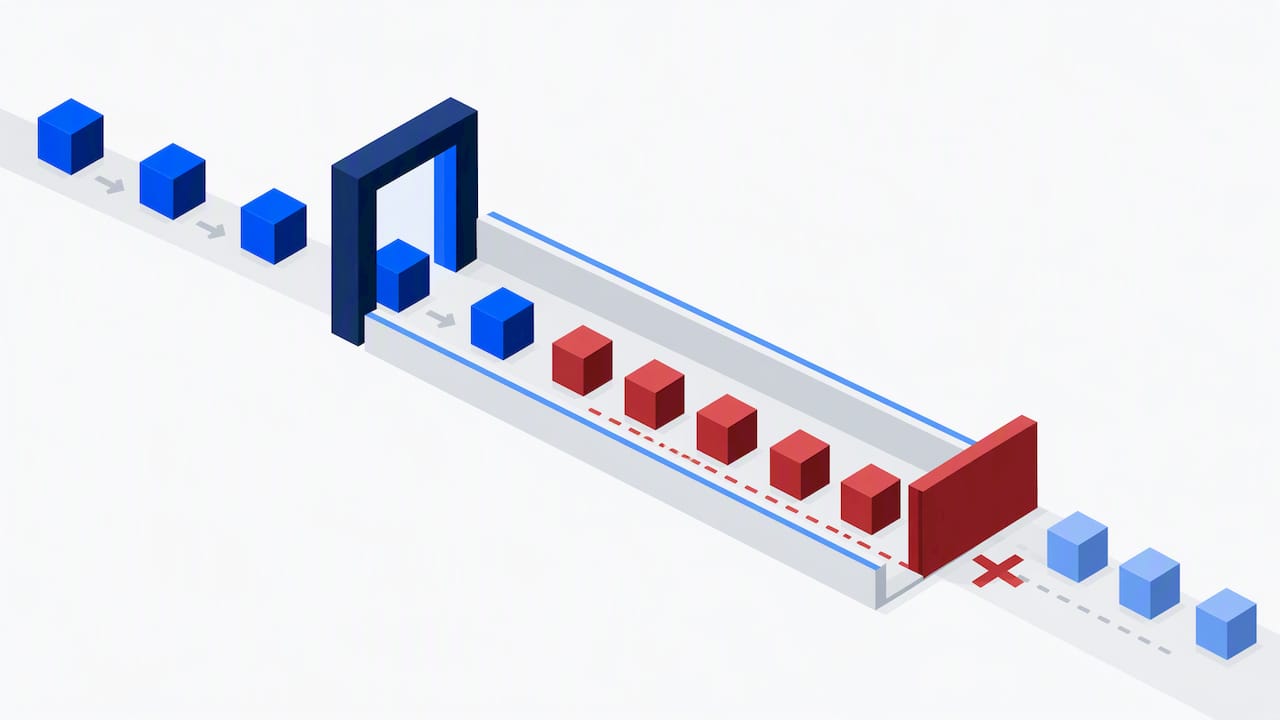
A “kill switch” is the institutional version of that idea: an automated trigger that disables further order entry once a predefined loss threshold hits. Retail traders can mirror this by setting hard session stops and committing in advance not to trade past that threshold, which removes the in-the-moment decision entirely.
On the institutional side, FIA guidance recommends pre-trade controls such as maximum order size and maximum intraday position limits to prevent accidental overexposure from a single fat-fingered order. You can adopt a simplified retail version of the same idea:
- Set a maximum order size in your platform’s order entry settings so a typo can’t 10x your intended position.
- Cap your maximum number of simultaneously open positions.
- Enable a daily loss limit alert, or a full trading lockout, if your broker supports it.
- Review your margin usage before every session, not after a margin call arrives.
Margin rules carry real regulatory weight for day traders. SEC and FINRA rules require a $25,000 minimum equity for pattern day traders and restrict day-trading buying power below that threshold, and brokers can impose even stricter requirements on top of that floor. Review our risk disclosure for a fuller picture of how margin and leverage affect your account before you commit real capital.
4. Testing, monitoring, and recovering from drawdowns
A rule you haven’t tested is a guess wearing a uniform. Before risking live capital on a strategy, backtest it for three things: the underlying edge, the expectancy per trade, and the maximum historical drawdown it would have produced.
- Confirm the edge: does the setup have a statistical reason to work, not just a handful of recent wins?
- Calculate expectancy: average win times win rate, minus average loss times loss rate, across at least 30 to 50 historical trades.
- Measure max drawdown: the largest peak-to-trough equity decline the strategy would have produced, which tells you what you need to psychologically tolerate.
A trading journal turns that discipline into an ongoing feedback loop. Capture the setup type, entry price, stop price, outcome, any deviation from your plan, and a short note on why you took or skipped the trade. Patterns emerge fast once you can see them laid out, and Learn Trading covers journal templates and position-sizing worksheets in more depth if you want a structured starting point.
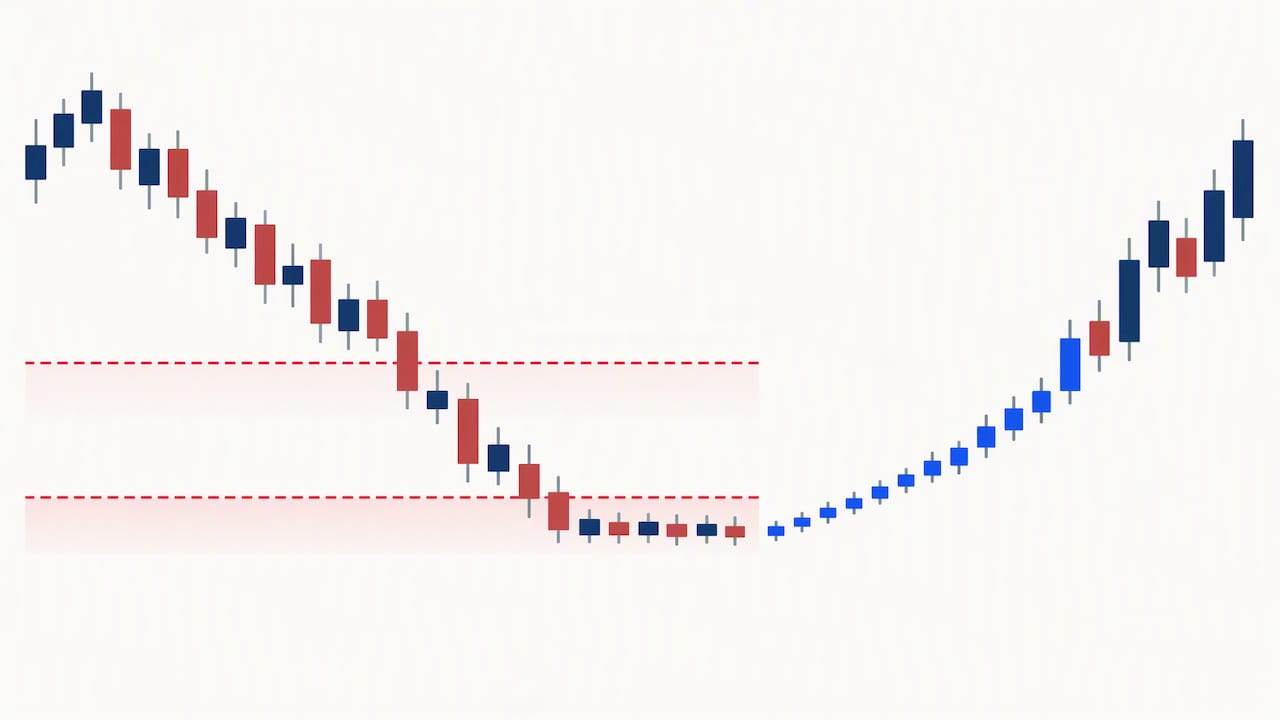
Set two drawdown thresholds in advance. Resuming trading after a hard stop should start at reduced size, not full size, until a fresh run of trades confirms the process is back on track.
5. How Prime Trading Signals puts risk rules into practice
We built our service around the same discipline this guide describes. Every signal we send carries a defined stop and target, not just an entry idea, so the risk decision is part of the alert rather than an afterthought you have to calculate alone under pressure.
Our subscribers get:
- Live signals, with multiple signals daily across crypto and forex markets.
- A high accuracy rate across our signal history, alongside clear stop and target levels on every ticket.
- Daily market reports that flag the kind of volatility and correlation risk covered above.
- Personalized coaching sessions to work through drawdown limits, position sizing, and process discipline.
- Support for a large number of clients who use our signals and guidance as part of their own risk process.
We explain every signal in plain language rather than raw numbers, so you still apply your own account size and risk percentage to each trade. Our risk disclosure outlines the limits of signal-based trading before you subscribe.
6. Why risk systems break down in practice
Risk management isn’t a rule you set once. It’s closer to an operating system that has to run every single session, because the moment you suspend it for “just this one trade,” it stops protecting you at all.
The most common failure mode I see isn’t a bad strategy. It’s a trader abandoning a perfectly good stop because the current trade “feels different,” or doubling size after two losses to chase even. Correlated overexposure is the quieter version of the same problem: several trades that look diversified on paper but move as one position the moment the dollar or a sector catches a strong trend.
The fixes are boring by design. A pre-trade checklist that forces you to write down position size and stop distance before entry. An automatic session stop that doesn’t ask your permission to trigger. A trade ticket you fill out every time, win or lose, so the record exists independent of how you feel about the trade afterward. Process discipline isn’t exciting, but it’s the difference between one bad week and one bad account.
— sibca
7. Putting a subscription to work inside your own risk plan
A signal service doesn’t replace your risk management, it gives you a faster, clearer starting point to apply it to.

Our plans are built around that division of labor:
- The Forex, Crypto, Crypto & Forex monthly plans provide stop and target guidance on every signal.
- The Forex (Lifetime) and Crypto (Lifetime) plans run $149 one-off each, while the Crypto & Forex (Lifetime) combined plan runs $299 one-off for long-term access to both markets.
- Our shop lists additional coaching and investment-plan tiers for traders who want more structured, hands-on guidance.
If you’re weighing whether signals fit your process, start with a sample channel to see how we explain a ticket, and read our risk disclosure before committing to a paid plan.
FAQ
What is the best risk management strategy for trading?
Pairing that with a 2:1 risk/reward target gives you room to be wrong on more than half your trades and still come out ahead.
What is the 2% rule in trading?
On a $50,000 account, that means a maximum loss of $1,000 per trade, calculated from your entry price and stop distance before you place the order.
What is the 3 5 7 rule in trading?
It’s a layered extension of the same idea behind the 2% rule: limit per-trade risk and total simultaneous exposure together.
What is the formula for risk management in trading?
Position size is calculated as account equity multiplied by your risk percentage, divided by your stop distance in dollars. On a $50,000 account risking 2%, that’s $1,000 in risk divided by your chosen stop distance to get the correct position size for that specific trade.
Do Prime Trading Signals include risk guidance with every signal?
Yes, every signal we send includes a defined stop and target level alongside the entry, and our services plans include daily market reports and coaching access to support your own position-sizing decisions.
Sources
- The 2 percent rule — CME Group
- Day Trading — SEC Office of Investor Education and Advocacy
- OTC foreign exchange turnover in April 2025 — BIS